
Pico do Fogo dominates the island, and its influence reaches far beyond the summit trail.
You can walk across recent lava in Chã das Caldeiras, taste wine grown in volcanic soil, explore the historic sobrados of São Filipe, follow the island north towards coffee country around Mosteiros and discover a coastline shaped by black rock and Atlantic surf.
The volcano connects many of these experiences.
It created the landscape, influences the soil, shapes agriculture and remains part of everyday life for communities living on its slopes.
Two or three days allow you to connect Fogo’s volcanic interior, historic capital and greener northern side at a comfortable pace.
Things to Do in Fogo at a Glance
Essential volcanic experience: Chã das Caldeiras
Major hike: Pico do Fogo
Shorter volcanic experience: Pico Pequeno and recent lava fields
Historic town: São Filipe
Local product: Fogo wine
Coffee region: Mosteiros
Nature: Parque Natural do Fogo and Monte Velha
Volcanic coast: Fonte Bila, Salinas de São Jorge and other black-sand or basalt shores
Culture: sobrados, markets and local festivals
Recommended stay: at least 2 full days
Ideal first visit: around 3 days
Useful base combination: São Filipe + Chã das Caldeiras when the volcano is a priority
For accommodation, transport and overall island planning, see our Fogo Travel Guide.
1. Experience Chã das Caldeiras
If you visit one place in Fogo beyond São Filipe, make it Chã das Caldeiras.
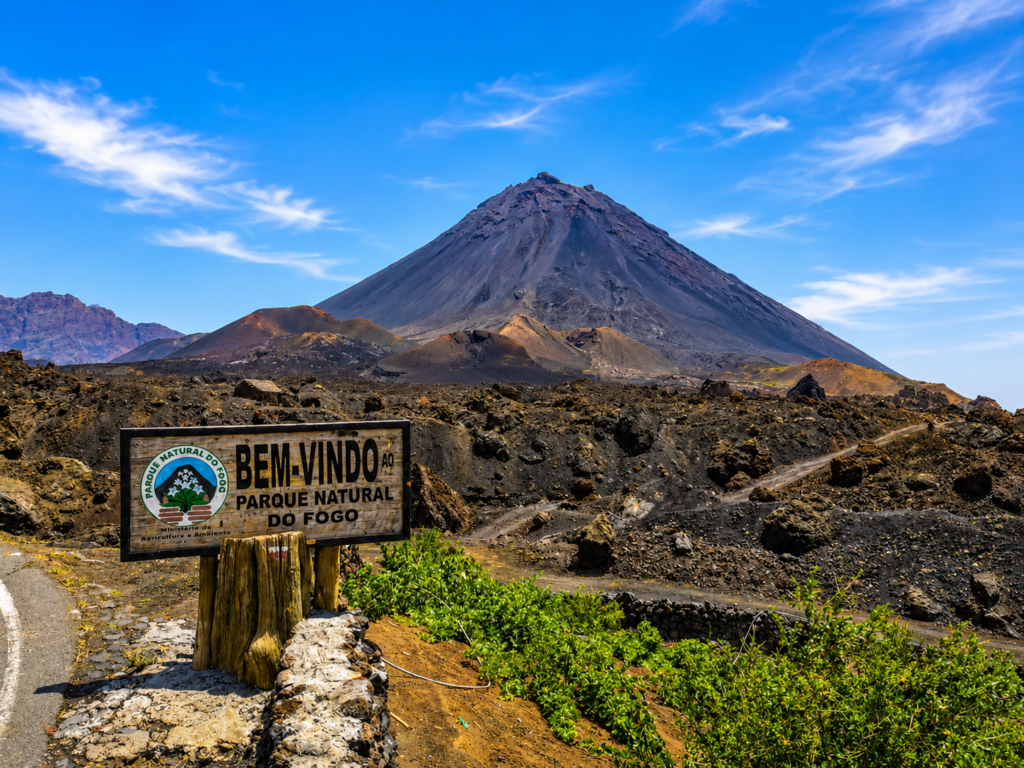
The settlement lies inside the great volcanic caldera at the foot of Pico do Fogo, surrounded by lava fields, volcanic cones and the immense wall of the Bordeira.
Pico do Fogo reaches 2,829 metres, making it the highest point in Cape Verde.
The surrounding landscape belongs to the Parque Natural do Fogo, which also includes the caldera, the Bordeira and the Monte Velha forest area.
Chã is also a living agricultural landscape.
Vines and other crops grow in volcanic soil among dark lava fields, creating one of the strongest visual contrasts on the island.
The eruption that began in November 2014 and continued into early 2015 destroyed much of Portela and Bangaeira and caused major damage to homes, farmland and local economic activity.
The communities later rebuilt and resumed agriculture and tourism inside the caldera.
That recent volcanic history is still visible throughout Chã das Caldeiras.
Chã das Caldeiras Is Worth the Journey without the Summit
You can spend several rewarding hours inside the caldera without climbing Pico do Fogo.
Walk through the settlements, cross hardened lava, see where newer construction meets older volcanic terrain and learn how agriculture continues inside an active volcanic landscape.
A local guide can explain the geology, community history and the 2014–15 lava flows in much more depth.
Travellers who prefer shorter walks can still experience the defining landscape of Fogo through Chã das Caldeiras, Pico Pequeno and the surrounding lava fields.
We can organise transport from São Filipe, a local guide, a volcanic landscape walk, lunch and wine tasting as a standalone experience or as part of an overnight stay.
2. Walk across the Lava and Explore Pico Pequeno
For a shorter volcanic walk, explore the lava fields and the area around Pico Pequeno.
This gives you close contact with the volcanic landscape while keeping the walking day much shorter than a summit ascent.
The terrain contains layers created by several eruptions, including the lava flows from 2014–15.
Dark lava, volcanic ash, smaller cones and the gradual return of vegetation make the caldera easier to understand at walking pace.
The exact route can be adapted to current conditions and the amount of time you want to spend on foot.
For many travellers, this is the strongest volcanic alternative to climbing Pico do Fogo.
3. Climb Pico do Fogo
For hikers, climbing Pico do Fogo is one of Cape Verde’s major mountain experiences.
The summit stands at 2,829 metres and rises dramatically above the caldera floor.
The route includes steep volcanic slopes, loose ash and rock, sustained climbing and a rapid descent over volcanic material.
Plan the hike with an experienced local mountain guide and start early enough to allow for rests, weather and changing conditions at altitude.
The climb normally takes most of the hiking day.
This article keeps the summit section deliberately concise.
Our dedicated Pico do Fogo Hike guide will cover route, difficulty, elevation gain, guide arrangements, equipment, timing and preparation in detail.
For the wider hiking picture across the archipelago, see Hiking in Cape Verde.
4. Taste Wine Grown in Volcanic Soil
Wine is one of Fogo’s defining local products.
Vines grow inside and around Chã das Caldeiras in volcanic soil, creating one of the most unusual agricultural landscapes in Cape Verde.
A visit to the caldera can include a winery or cooperative tasting, depending on current opening arrangements.
Local producers make red, white and other Fogo wines.
You may also encounter Manecom, the traditional homemade wine associated with Chã das Caldeiras.
The tasting becomes much more meaningful after seeing where the grapes grow.
Combining wine with the caldera, villages and volcanic landscape gives the day a stronger connection between agriculture and place.
Add a Fogo Wine Experience to My Trip
We can combine Chã das Caldeiras, volcanic landscapes, a local lunch and wine tasting in the same day from São Filipe or as part of an overnight stay in the caldera.
5. Spend a Night in Chã das Caldeiras
Chã changes after day visitors leave.
An overnight stay gives you more time inside the caldera and makes the following morning easier if you are climbing Pico do Fogo or taking another hiking route.
It also separates the volcanic experience from the road journey back to São Filipe.
Expect cooler temperatures than on the coast, especially at night.
The strongest reason to stay is time.
An evening and early morning inside the caldera allow you to experience the landscape more slowly and appreciate the scale of the surrounding crater walls.
Travellers with only two nights on Fogo may prefer to remain in São Filipe and visit Chã as a day trip.
With three or more nights, combining São Filipe + Chã das Caldeiras becomes much easier.
6. Explore the Historic Centre of São Filipe
Set aside several hours for São Filipe before or after Chã das Caldeiras.
Fogo’s capital is one of Cape Verde’s notable historic urban centres and is strongly associated with its sobrados — large two-storey houses built by wealthy families connected with agriculture, commerce and Atlantic trade.
The historic centre developed through Fogo’s economic links with products including coffee, wine and other agricultural goods.
Today, the old streets combine sobrados, public squares, churches, local businesses and views towards the Atlantic.
The historic centre has been on Cape Verde’s UNESCO Tentative List since 2016.
Look beyond the Façades of the Sobrados
The sobrados tell more than an architectural story.
Their size, balconies, courtyards and internal organisation reflect an earlier social and economic structure in São Filipe.
A walk through the centre can include:
- Praça das Bandeiras and surrounding streets;
- historic sobrados;
- Igreja Matriz;
- municipal market;
- Casa da Memória;
- historic civic and religious buildings;
- viewpoints towards the coast.
São Filipe also has a digital Smart Tour covering parts of the historic centre.
Allow the walk to develop naturally if a market, square or local café draws your attention.
Check the Current Status of the Municipal Museum
The Museu Municipal de São Filipe is an important cultural reference but has been undergoing rehabilitation and museographic renewal.
Check whether it has reopened before planning a visit.
For travellers interested in local history, Casa da Memória provides another valuable cultural stop in São Filipe and preserves objects, documents and other material connected with the island’s past.
7. See Fogo’s Black Volcanic Coast
The volcanic character of Fogo continues all the way to the sea.
Black sand, dark pebbles, basalt formations and Atlantic surf create a coastline that feels very different from the pale resort beaches associated with islands such as Sal or Boa Vista.
Around São Filipe, Fonte Bila is the best-known black-sand beach below the historic town.
It is attractive for walking, photography and views along the volcanic coast.
Access can be affected by rockfall and heavy rain.
Check current local conditions before going, especially if you plan to use the pedestrian access from São Filipe.
Swimming conditions should also be assessed separately from the scenery.
The Atlantic around Fogo can be powerful, and an attractive black-sand beach is not automatically a safe swimming beach.
8. Visit Salinas de São Jorge
Salinas de São Jorge combines a fishing area, volcanic coastline and natural pools.
Its basalt formations create one of Fogo’s most distinctive coastal environments.
When sea conditions permit, the more protected pools can provide a calmer bathing option than exposed sections of open coast.
There is an important current planning consideration.
A major project to redevelop the fishing and bathing area and improve road access was approved in 2026.
Check current access and conditions before making Salinas a fixed stop, as rehabilitation work may affect parts of the area during the project.
9. Discover Mosteiros and the Greener North
Northern Fogo becomes noticeably greener.
Mosteiros lies on the coast below productive agricultural slopes and creates a strong contrast with the black lava fields of Chã das Caldeiras and the historic streets of São Filipe.
Coffee, fruit and other crops benefit from the local microclimate.
The journey north is part of the experience as the landscape changes from dry volcanic terrain towards more intensively cultivated areas.
Mosteiros can be combined with:
- coffee;
- local agriculture;
- coastal scenery;
- small communities;
- short walks;
- a wider island circuit.
It is one of the best additions for travellers who want to understand Fogo beyond the caldera.
10. Learn about Fogo Coffee
Coffee has a long history on Fogo and is closely associated with Mosteiros.
Arabica coffee grows on volcanic slopes where altitude and local climate create favourable conditions for cultivation.
A coffee experience can include plantations, local producers or the Museu do Café in Mosteiros, depending on current opening arrangements.
This gives northern Fogo a clear identity of its own.
Wine naturally leads you towards Chã das Caldeiras.
Coffee leads you towards Mosteiros.
Experiencing both makes it easier to understand how dramatically agriculture changes across one relatively small volcanic island.
11. Explore Monte Velha and Fogo’s Higher Vegetation
Fogo is often imagined as black lava and dry volcanic rock, but higher parts of the island bring another landscape.
The Monte Velha forest area forms part of the Parque Natural do Fogo and adds higher-altitude vegetation to the island.
Walking routes around the upper slopes can combine forest, agricultural land and views across other parts of Fogo.
This is a good option when you have more than two days and want another nature experience after visiting the caldera.
Longer-distance walkers can also explore routes linking the highlands towards northern parts of the island.
Altitude changes the character of Fogo quickly, sometimes within a relatively short drive or walk.
12. Take an Island Circuit
A road circuit is one of the easiest ways to understand how Fogo changes beyond its best-known attractions.
Depending on road conditions, starting point and the route chosen, a day can connect:
São Filipe → volcanic interior → Chã das Caldeiras → northern agricultural areas → Mosteiros → coast → São Filipe
A private driver or guided island tour makes it easier to stop at viewpoints, villages and agricultural areas without coordinating several separate transport connections.
Current road conditions can occasionally affect the most efficient route, especially after heavy rain or landslides, so confirm the day’s circuit locally.
Keep the Pico do Fogo summit and a complete island circuit on separate days.
Each benefits from enough time of its own.
We can combine São Filipe, Chã das Caldeiras, volcanic landscapes, local products, Mosteiros and coastal stops according to the time available and current road conditions.
13. Taste Fogo beyond Wine and Coffee
Fogo’s local products extend beyond its two best-known drinks.
Look for:
- goat cheese;
- fresh and grilled fish;
- cachupa;
- local goat dishes;
- cufongo and other corn-based foods;
- sweet-potato dishes;
- grogue and ponche;
- seasonal fruit.
Availability varies between São Filipe, Chã das Caldeiras and rural communities.
A local lunch during an island tour can fit naturally into the route and introduce ingredients connected directly with the surrounding landscape.
Food becomes more interesting when you see where it is produced.
14. Experience the Festa da Bandeira de São Filipe
One of Fogo’s major annual celebrations takes place in São Filipe around the end of April and 1 May.
The Festas da Bandeira de São Filipe, often referred to locally as Nhô São Filipe, combine religious and popular traditions, music, community events and the famous cavalhadas horse-riding tradition.
The programme develops over several days and can have a major effect on the atmosphere in São Filipe.
If the festival coincides with your trip, check the current programme and reserve accommodation and transport early.
Fogo also hosts other local religious and cultural festivals throughout the year.
How Much Time Do You Need for Fogo?
Two full days are a strong minimum for Fogo.
Three days give you enough room to separate São Filipe, the volcanic interior and the northern side of the island.
One Full Day
With only one full day, focus on:
São Filipe → Chã das Caldeiras → volcanic landscape → local lunch or wine → São Filipe
This gives you the defining volcanic experience and some time in the capital.
Leave Mosteiros and the wider island circuit for another trip.
Two Full Days
This is the minimum I would recommend for travellers who want to understand more than the volcano.
Use one day for:
Chã das Caldeiras and the volcanic landscape
and another for:
São Filipe + Mosteiros / northern Fogo
This creates a much stronger contrast between the island’s interior, town and agricultural north.
Three Full Days
Three days are ideal for a first visit when Fogo is an important part of the itinerary.
You can separate the experiences more comfortably:
Day 1 — São Filipe
Historic centre, sobrados, market, Casa da Memória and volcanic coast.
Day 2 — Chã das Caldeiras
Lava landscape, wine and either a shorter volcanic walk or Pico do Fogo.
Day 3 — Mosteiros and northern Fogo
Coffee, agriculture, villages and coastal stops.
Treat these as building blocks rather than a strict timetable.
If weather hides the summit, move another activity forward and keep the mountain for a clearer day.
Getting around Fogo
Fogo’s main experiences are spread across several parts of the island.
São Filipe is easy to explore on foot.
For Chã das Caldeiras, Mosteiros and wider island circuits, the main options are:
- private transfer;
- taxi or private driver;
- organised tour;
- rental car;
- shared local transport when routes and timings suit your plans.
A private driver becomes especially useful when combining several stops in one day.
Road conditions can change after heavy rain or landslides, so check locally before a longer island circuit.
For complete arrival, accommodation and transport planning, see our Fogo Travel Guide.
For air connections, see Domestic Flights in Cape Verde.
If travelling by sea or combining Fogo with Brava or Santiago, see Cape Verde Ferries.
Fogo for Hikers and Non-Hikers
Fogo is an obvious destination for hikers because of Pico do Fogo and the island’s other trails.
The island also works very well for travellers who prefer shorter walks, culture, food and landscape.
Chã das Caldeiras, São Filipe, volcanic agriculture, wine, coffee, Mosteiros and the black coast provide enough variety without a summit climb.
Hikers can then add Pico do Fogo or longer routes according to fitness, weather and available time.
See Hiking in Cape Verde for comparisons with Santo Antão, Santiago and São Vicente.
Combine Fogo with a Longer Cape Verde Trip
Fogo adds a living volcanic landscape, historic architecture and high-altitude agriculture to a multi-island itinerary.
It combines naturally with Santiago and can also be integrated into longer trips involving São Vicente or Santo Antão.
The important planning factor is the complete transport block.
Count airport or port transfers, check-in, waiting time and onward connections rather than only the nominal flight or ferry duration.
See our Cape Verde 14-Day Itinerary for one way to decide how many islands can realistically fit into two weeks.
Plan Your Fogo Island Trip
Fogo works best when the volcano becomes the starting point for exploring the island.
Spend time inside Chã das Caldeiras.
Walk across the lava.
Taste wine where the grapes grow.
Give São Filipe enough time for its sobrados, streets and local life.
Follow the island north for coffee and greener agricultural landscapes.
Add the summit when hiking is one of your priorities.
Tell us:
- your travel dates;
- number of days on Fogo;
- whether you want to climb Pico do Fogo;
- preferred walking level;
- interest in wine, coffee, culture or local food;
- whether you want to stay in Chã das Caldeiras;
- whether Fogo is being combined with another island;
- number of travellers.
We can organise accommodation, airport or port transfers, Chã das Caldeiras visits, local guides, Pico do Fogo hikes, wine and coffee experiences, island tours and onward connections.