
Santiago changes noticeably as you travel from Praia into the island’s agricultural interior and north towards Serra Malagueta and Tarrafal.
In the south, Praia introduces the capital and everyday urban life. Nearby, Cidade Velha opens a much older and more difficult chapter of Cape Verdean history. Further inland, markets, cultivated valleys and mountain roads begin to dominate the landscape. In the north, Serra Malagueta leads towards Tarrafal, where a sheltered beach and one of the country’s most important sites of political memory sit only a few kilometres apart.
This variety also makes planning important.
Santiago is Cape Verde’s largest island, and many of its most interesting places are spread across it. A long island tour can cover considerable ground, but spending two, three or four days here allows each region to play a more meaningful role in the trip.
For many first-time visitors, three days provide a strong balance: one for Praia and Cidade Velha, one for the agricultural interior and north, and another for hiking, Tarrafal, the east coast or a slower cultural experience.
Santiago at a Glance
| Santiago Facts | Quick Answers |
|---|---|
| Best for | History, local culture, markets, rural landscapes, hiking and varied island travel |
| Main gateway | Praia |
| Major historic site | Cidade Velha |
| Main mountain area | Serra Malagueta |
| Best-known beach base | Tarrafal |
| Good first stay | 3 days |
| More complete stay | 4–5 days |
| Possible as a day trip? | Yes, for an overview |
Santiago covers around 992 km² and is the largest island in Cape Verde. Its highest point, Pico da Antónia, reaches 1,392 metres.
Praia lies in the south. Tarrafal is at the northern end of the island. Between them are agricultural valleys, inland towns, mountain areas and several possible routes.
The distances are manageable, but they matter when deciding how much to include in one day.
How Many Days Do You Need in Santiago?
One Day
One day can provide a useful introduction, but the choice of route matters.
If history is your main interest, spend the day between Praia and Cidade Velha.
A full-island tour can instead take you through the interior towards Assomada, Serra Malagueta and Tarrafal. It covers more geography, but several hours are spent on the road and each stop receives less time.
One day is enough for an overview. It is not enough to explore every part of Santiago in depth.
Two Days
Two days allow the island to separate into more coherent experiences.
Use one for Praia and Cidade Velha, then dedicate the second to the interior and north.
That second day might concentrate on agricultural areas, Assomada and Serra Malagueta, or continue further to Tarrafal if you are comfortable with a longer journey.
Three Days
Three days suit many first visits well.
Praia and Cidade Velha can have a full day. Another can follow the interior north through agricultural communities, Assomada and Serra Malagueta.
The third creates room for Tarrafal, the east coast, a hike or a cultural experience that would otherwise be compressed into a long transfer day.
At this pace, Santiago begins to feel like somewhere you have stayed rather than somewhere you have simply crossed.
Four to Five Days
Four or five days create considerably more flexibility.
Tarrafal can become a second base instead of the final stop on a long day from Praia. A substantial hike can occupy its own day. The east coast can form part of the return south, and markets, museums and family experiences no longer have to compete with several hours of driving.
This duration is especially useful for travellers who want to combine history, hiking and everyday life rather than prioritise one of them.
Explore Praia Beyond the Airport
Praia is often treated primarily as the arrival point for Santiago, but the capital is part of the experience.
The Plateau is the easiest place to begin.
Praça Alexandre Albuquerque, Avenida Amílcar Cabral, public buildings, shops and surrounding streets form the historic centre and provide an accessible introduction to urban life in Cape Verde.
Markets bring another part of Santiago into the city.
Sucupira Market is large and busy, with clothing, household goods, food and many other products. The Municipal Market places more emphasis on fresh produce and helps connect Praia with the agricultural areas that supply the capital.
If you want more context, visit the Museu Etnográfico da Praia.
Its collection covers subjects including agriculture, fishing, livestock, weaving, pottery, basketry, domestic life, music and oral traditions. It is a useful stop before travelling through rural Santiago because many of the objects and practices represented in the museum relate directly to the communities and landscapes encountered elsewhere on the island.
Praia is also a convenient evening base. After a day in Cidade Velha or the interior, restaurants and the city’s cultural life provide a natural continuation without another long journey.
Understand Cape Verde’s History in Cidade Velha
Cidade Velha deserves enough time for its history to be understood.
Located south-west of Praia, the historic Ribeira Grande became the first permanent European colonial urban settlement established in the tropics.
Its growth was closely connected to Portuguese Atlantic expansion and to the trafficking and enslavement of African people. The settlement also became an early meeting point between African and European populations, languages and traditions during the development of Creole society.
Cidade Velha was inscribed on the UNESCO World Heritage List in 2009.
Several surviving sites make different parts of that history visible.
The Fortaleza Real de São Filipe stands above the settlement and coastline. Below are the Pelourinho, Nossa Senhora do Rosário church, the ruins of the cathedral, the Convento de São Francisco and the historic Rua Banana.
The surviving architecture is only part of the visit.
Much of Cidade Velha’s importance lies in events and systems that are no longer visible in the streets themselves. A knowledgeable guide can therefore add valuable historical context, especially when explaining the relationship between the port, colonial expansion, slavery and the formation of Cape Verdean society.
Its proximity to Praia makes it possible to combine the two places in one day without spending most of that day in transport.
Experience Santiago’s Agricultural Interior
Travelling inland shifts the emphasis from urban and colonial history to agriculture, communities and mountain landscapes.
Around São Lourenço dos Órgãos and São Jorge dos Órgãos, cultivated land becomes more visible and higher elevations can be noticeably greener than the drier areas around Praia.
São Jorge dos Órgãos is also home to the Jardim Botânico Nacional Grandvaux Barbosa, where visitors can see plant species associated with Cape Verde and learn more about the vegetation of the archipelago.
The area becomes more useful to the traveller when agriculture is connected with food and everyday life rather than observed only from a vehicle.
In our Cape Verde Essentials programme, for example, travellers visit a family in São Lourenço dos Órgãos, prepare traditional Cape Verdean cuscuz and learn about local dance traditions before continuing through the island.
That kind of experience gives the landscape context.
The maize, sugar cane, fruit and other crops seen along the road are part of food production and household life, rather than simply scenery.
Spend Time in Assomada
Assomada is one of the principal towns in Santiago’s interior and an important commercial centre for the surrounding agricultural areas.
Its market is the natural place to begin.
Produce and goods arrive from across the region, and the activity around the market provides a useful contrast with both Praia and the smaller communities encountered on the road.
Assomada also works well geographically.
It sits between the agricultural areas further south and the mountain landscapes of Serra Malagueta, making it a natural stop when travelling north.
If markets, food or everyday life are important to you, allow enough time to walk around rather than using Assomada only as a brief stop between two attractions.
Walk in Serra Malagueta
North of Assomada, the road climbs into one of Santiago’s main protected mountain areas.
Serra Malagueta Natural Park combines mountain scenery, walking trails, birdlife and endemic vegetation.
How much time to spend here depends on the role hiking plays in your trip.
Travellers mainly interested in seeing Santiago’s changing landscapes can include a short walk or viewpoint stop before continuing north.
Those who chose Santiago partly for hiking should give the park more time.
A meaningful walk in Serra Malagueta becomes difficult to appreciate when it is squeezed between several other stops simply because they happen to sit along the same road.
Our Hiking in Cape Verde guide places Santiago within the wider hiking options of the archipelago and compares it with islands where trekking plays an even larger role, particularly Santo Antão and Fogo.
Continue North to Tarrafal
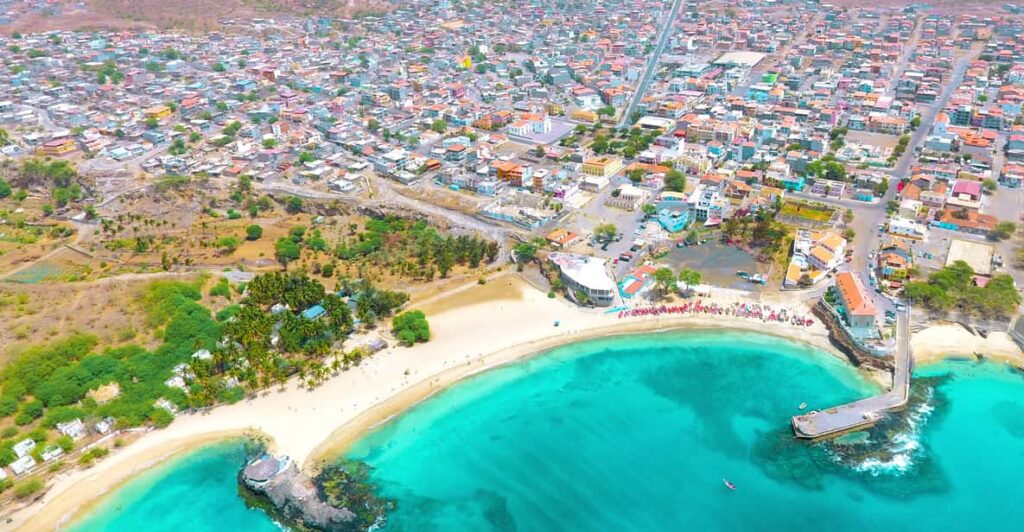
Beyond Serra Malagueta, the journey eventually returns to the coast at Tarrafal.
The town is best known among visitors for its sheltered bay and beach.
After several days of historical sites, markets, agricultural areas and mountain roads, Tarrafal can provide a slower section of the journey. Swimming, lunch by the coast or an unstructured afternoon can be enough.
The town becomes more useful as a base when you have three or more days on Santiago.
Staying overnight removes the need to drive all the way back to Praia at the end of a long northern journey. It also leaves the following morning available for the beach, the town, nearby walks or a visit to Chão Bom.
For a longer Santiago stay, Praia and Tarrafal can therefore function as two complementary bases.
Visit the Tarrafal Resistance Museum
Tarrafal’s beach and the former concentration camp at nearby Chão Bom should be treated as separate parts of the visit.
The Campo de Concentração do Tarrafal was created in 1936 under Portugal’s Estado Novo dictatorship.
During its first period, from 1936 to 1956, it held Portuguese anti-fascist political prisoners.
It reopened in 1962 as the Campo de Trabalho de Chão Bom, receiving anti-colonial prisoners from Cape Verde, Angola and Guinea-Bissau. The camp closed on 1 May 1974, days after the Portuguese revolution that ended the Estado Novo regime.
Today, the site houses the Museu da Resistência.
Documents, photographs, testimonies and surviving spaces help explain the lives of prisoners and the role the camp played during both the dictatorship and the anti-colonial struggles.
The site has been classified as National Cultural Heritage in Cape Verde and is included on the country’s UNESCO Tentative List.
A guided or carefully contextualised visit is valuable here. The physical site alone cannot explain the political history represented by its cells, buildings and documents.
Check current opening arrangements before building the visit into a fixed schedule.
Return Through Santiago’s East Coast
If you have enough time, travelling north and south by separate routes can reveal more of Santiago.
From Tarrafal, the return towards Praia can pass through areas such as Ribeira Principal, São Miguel, Pedra Badejo and Santa Cruz.
The eastern side combines coastal landscapes with agricultural areas, including regions where bananas, papayas, coconuts and other crops are grown.
The road also passes through towns and communities that are rarely part of a short Praia–Cidade Velha visit.
Our Cape Verde Essentials route uses this logic after an overnight stay in Tarrafal: the journey back to Praia becomes another part of the trip instead of simply retracing the same road.
For a two-day stay, this may add too much travel.
With three or four days, it can provide a clearer understanding of how the island’s regions connect.
Hike Around Rui Vaz and Pico da Antónia
Serra Malagueta is not Santiago’s only mountain area.
Further south, Rui Vaz and Pico da Antónia provide another option for travellers interested in hiking.
Pico da Antónia rises to 1,392 metres and is the highest point on Santiago.
The surrounding highlands offer walking routes, rural landscapes and cooler mountain environments within relatively easy reach of Praia.
This area makes most sense when hiking is an important part of the trip.
For a first cultural visit with only two or three days, Serra Malagueta may already provide enough mountain scenery and walking.
With four or five days, Rui Vaz and the Pico da Antónia area can justify dedicated time rather than being added hurriedly to a day that already includes other regions.
Make Time for Food, Music and Everyday Life
Some of Santiago’s most useful cultural experiences do not require another attraction on the itinerary.
Markets provide a direct link with the island’s agricultural production. Fruit, vegetables, maize and other products seen in the interior appear again in Praia and Assomada.
Food provides another connection.
Cachupa is one of the dishes most closely associated with Cape Verde, while cuscuz can be encountered as part of family or community experiences rather than simply ordered from a menu.
Our own São Lourenço dos Órgãos experience uses that approach: travellers prepare cuscuz with a local family and learn about traditions in the same place where the agricultural landscape is part of everyday life.
Music is another important part of Santiago.
Batuque and funaná have strong associations with the island, although what is available to visitors depends on the dates and location of the trip.
Praia gives you the greatest flexibility in the evenings. Ask your accommodation, local guide or host what is happening while you are there rather than organising the journey around a performance that may not take place on your dates.
Leaving some time unprogrammed often makes these smaller experiences easier to encounter.
Can You See Santiago in One Day?
A full-day tour can show a surprising amount of Santiago, but the route needs a clear priority.
History: spend the day between Praia and Cidade Velha.
Island overview: travel through the interior towards Assomada, Serra Malagueta and Tarrafal.
Hiking: choose one mountain area and give it enough time for an actual walk.
A full island circuit provides considerable geographical range, but several hours of the day are spent travelling and each stop becomes shorter.
Trying to combine the historical south, a substantial hike and the full journey to Tarrafal produces a crowded day rather than a more complete experience.
How to Organise Two, Three or Four Days in Santiago
A first visit becomes easier to plan when the days are organised geographically.
| Time available | Practical structure |
|---|---|
| 2 days | Praia + Cidade Velha; interior + Serra Malagueta or Tarrafal |
| 3 days | Praia + Cidade Velha; agricultural interior + north; east coast, Tarrafal or hiking |
| 4 days | Add an overnight stay in Tarrafal and more time in the mountains or interior |
| 5 days | Add a dedicated hiking day, slower cultural experiences and more unstructured time |
These structures can be adapted to the reason you chose Santiago.
A traveller interested in political and colonial history might spend more time in Cidade Velha and at the Museu da Resistência.
A hiker can dedicate a full day to Serra Malagueta or Rui Vaz.
Someone looking for a slower journey may prefer an overnight stay in Tarrafal and fewer long driving days.
Include Santiago in a Longer Cape Verde Trip
Santiago combines naturally with islands that change the pace or landscape of the journey.
Our 7-Day Cape Verde Itinerary uses Santiago for Praia, Cidade Velha, the agricultural interior and mountain landscapes before continuing to Sal.
That gives the traveller three nights on Santiago and three on Sal while keeping the trip to one main inter-island transfer.
With seven nights instead of seven days, Cape Verde Essentials – 8 Days gives Santiago more room.
The programme includes Praia and Cidade Velha, a family experience in São Lourenço dos Órgãos, Assomada, Serra Malagueta, Tarrafal and a return through the east of the island before continuing to Sal.
Travellers with other priorities can spend longer on Santiago, combine it with Fogo or include it within a broader island-hopping journey.
Our local team can organise accommodation, private transport, guides, cultural experiences, hiking and connections with other Cape Verde islands around the time you have available.