
Cape Verdean food starts with maize, beans and the Atlantic.
From that foundation comes a cuisine shaped by dry islands, fertile valleys, fishing communities, migration and centuries of movement between West Africa, Portugal and the wider Atlantic world.
Cachupa is the national dish and the name most travellers encounter first. It is also only one part of a much larger food tradition.
Maize becomes cuscuz, xerém, porridge, camoca and regional dishes. Fish changes with the day’s catch. Fogo produces wine and coffee in volcanic terrain. Santo Antão has a long tradition of sugar cane and grogue. Goat cheese, tropical fruit, seafood, stews and fried snacks appear in different forms across the islands.
The practical side matters as much as the list of dishes.
A local café and a beachfront restaurant in Santa Maria operate in very different price ranges. Lobster may be sold by weight. A restaurant accepting euros may use a conversion rate less favourable than the official euro–escudo parity.
Even familiar-looking food names sometimes need an explanation.
Cachupa pobre, for example, is not automatically vegetarian.
This guide covers what to eat, when to look for it, where particular foods have strong local connections, what meals can cost and how to order with fewer surprises.
Cape Verde Food at a Glance
| Question | Practical Answer |
|---|---|
| National dish | Cachupa |
| Key staple | Maize |
| Common ingredients | Beans, vegetables, tubers, fish and meat |
| Useful fish order | Peixe do dia — fish of the day |
| Classic local breakfast | Cachupa guisada, often with egg |
| Popular savoury snack | Pastel com diabo dentro |
| Traditional spirit | Grogue |
| Grogue strength | 38–54% ABV under Cape Verdean regulations |
| Fogo specialties | Wine, coffee, goat cheese, djagacida |
| Santo Antão specialties | Grogue, sugar cane and goat cheese |
| Vegetarian tip | Ask what is actually in the dish |
| Official euro exchange rate | €1 = 110.265 CVE |
| Best dining approach | Mix local cafés, markets and restaurants |
What Cape Verdean Food Is Really Like
Cape Verdean cooking reflects the geography of an archipelago where reliable agriculture has never been taken for granted.
Maize and beans became foundations of everyday food. Depending on the island and season, they may be joined by cassava, sweet potato, yam, squash, cabbage, bananas and other locally grown produce.
The Atlantic provides another major part of the diet.
Tuna, mackerel, grouper, moray eel, octopus, conch and other catches appear grilled, fried, stewed or in broth.
Meat also plays an important role, including pork, chicken and goat.
Cape Verde’s history brought ingredients and cooking practices across the Atlantic. Portuguese and West African influences are visible, alongside connections created through trade, migration and contact with Brazil and other Atlantic regions.
The result developed locally over generations.
Maize is one of its clearest connecting threads.
Cachupa: Cape Verde’s National Dish
Cachupa is the dish most closely associated with Cape Verde.
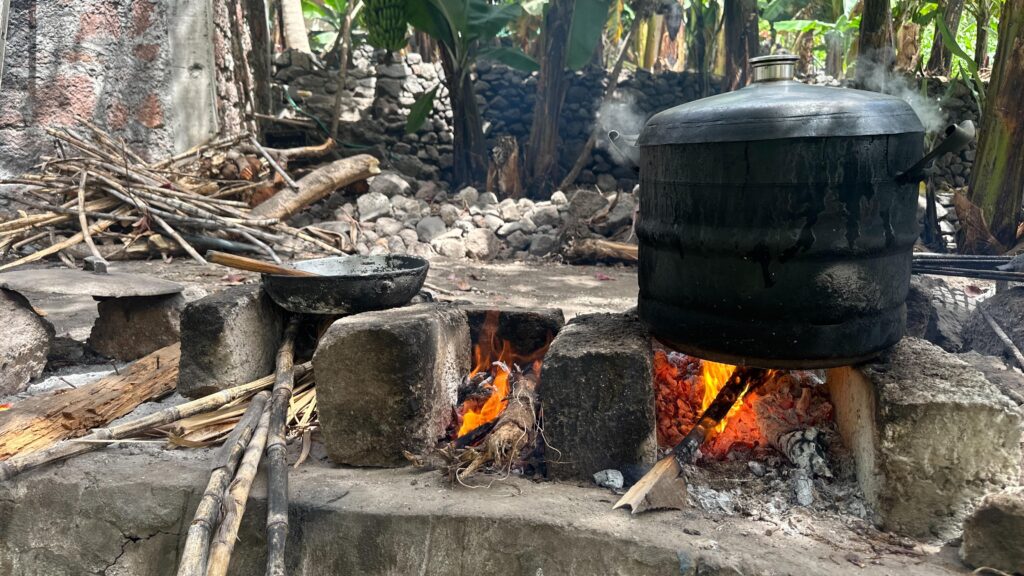
At its base is a slow-cooked combination of maize and beans, with other ingredients varying according to the cook, household, island and occasion.
Possible additions include:
- cassava;
- sweet potato;
- squash;
- cabbage;
- tomato;
- onion;
- fish;
- pork;
- sausage;
- chicken or other meats.
There is no single universal recipe.
Two restaurants can serve recognisably different versions and both still be serving cachupa.
Cachupa Rica
Cachupa rica is the more substantial version.
It often contains several meats or richer additions alongside maize, beans and vegetables.
Depending on the kitchen, combinations may include pork, sausage, chicken or other meats.
It is filling food, usually better treated as the centre of a meal than as a side dish.
Cachupa Pobre
The name cachupa pobre can mislead vegetarian travellers.
Some current versions are built mainly around maize, beans and vegetables. Traditional descriptions also include preparations where fish replaces more expensive meat.
The contents depend on the kitchen.
Ask:
“Tem carne ou peixe?”
Does it contain meat or fish?
For vegetarians, the name alone is not enough.
Cachupa Guisada
Leftover cachupa often returns at breakfast as cachupa guisada.
It is reheated or fried in a pan, developing more texture than the original slow-cooked version, and is commonly served with a fried egg. Sausage or other accompaniments may also be added.
It is one of the most useful dishes for understanding everyday Cape Verdean food because it connects two meals.
A dinner dish becomes breakfast the following morning.
If your accommodation serves only an international-style breakfast, try a local café at least once and look for cachupa guisada.
Maize Beyond Cachupa
Cachupa is the most famous maize dish, but maize occupies a much larger place in Cape Verdean food.
Traditional preparations include:
- cuscuz;
- xerém;
- porridge;
- camoca;
- roasted or boiled maize;
- breads;
- cakes;
- regional dishes such as djagacida.
Together, they show why maize is better understood as a structural ingredient in Cape Verdean cuisine rather than simply one component of cachupa.
Cape Verdean Cuscuz: Not the Couscous You May Expect
Travellers familiar with North African couscous may be surprised by Cape Verdean cuscuz.
It is traditionally made from maize and steamed, historically in a special vessel known as a binde.
The finished food is more cake-like than loose-grained couscous.
It may be eaten:
- at breakfast;
- as a snack;
- with butter;
- with milk;
- with cheese;
- with honey or sugar-cane syrup;
- as a sweet preparation.
Recipes and accompaniments vary between households and islands.
Xerém
Xerém is another maize preparation.
It uses crushed or coarsely ground maize and can range from a soft, porridge-like consistency to a firmer preparation.
It may accompany fish or meat or form part of a larger traditional meal.
Cachupa, cuscuz and xerém all begin with maize but produce very different dishes.
Djagacida
On Fogo, look for djagacida, also written jagacida.
Recipes vary, but the dish is associated with maize, beans and ingredients that can include cabbage, salted meat or pork.
It sits naturally beside Fogo’s better-known wine, coffee and cheese traditions.
Travellers visiting primarily for Pico do Fogo and Chã das Caldeiras should leave some space in the itinerary for the island’s food.
See Things to Do in Fogo and Pico do Fogo Hike when planning the stay.
Fish and Seafood in Cape Verde
Cape Verde is an Atlantic archipelago, and fish belongs near the centre of its food culture.
Menus may include:
- tuna;
- grouper;
- mackerel;
- wahoo and other pelagic fish;
- moray eel;
- octopus;
- conch;
- lobster;
- limpets;
- barnacles;
- other seasonal catches.
Availability changes with the island, fishing conditions, season and fisheries regulations.
One menu phrase is therefore especially useful:
peixe do dia — fish of the day.
An online menu shows what the restaurant may serve.
The day’s catch tells you what the kitchen actually has.
Fish of the Day
Asking for the fish of the day is often more useful than arriving determined to order one particular species.
It may be:
- grilled whole;
- served as a fillet;
- fried;
- stewed;
- accompanied by rice;
- served with vegetables, potatoes or sweet potato.
Ask what the fish is and how it is being prepared.
Simple grilled fish can be one of the most straightforward ways to eat well in Cape Verde.
Caldo de Peixe
Caldo de peixe is a fish broth or stew.
Versions may combine fish such as mackerel or grouper with starchy vegetables and tubers including:
- cassava;
- potato;
- sweet potato;
- yam.
It gives a different view of Cape Verdean fish cooking from the grilled seafood commonly promoted to visitors.
Seafood Beyond Grilled Fish
Depending on island and season, other options may include:
Moreia — moray eel, traditionally eaten fried.
Búzio — conch, which may be grilled, stewed or used in other preparations.
Polvo — octopus, common in salads, stews and grilled dishes.
Percebes and lapas — goose barnacles and limpets associated with coastal food traditions.
Availability varies, so these are foods to look out for rather than items to expect on every menu.
Lobster: Check the Price Before Ordering
Lobster appears frequently on tourist menus, especially on Sal and Boa Vista.
The important detail is how it is priced.
A restaurant may charge:
- per portion;
- per 100 g;
- per kilogram;
- by the whole animal.
Current menus in Santa Maria include lobster priced per 100 g, sometimes with a minimum weight.
When lobster or a large whole fish is sold by weight, ask:
How much does this one weigh?
and:
What will the approximate total price be?
Lobster fishing is also regulated and subject to closed seasons and species-specific rules.
Availability can therefore change during the year.
Pastel com Diabo Dentro
With a name meaning roughly “pastry with the devil inside”, pastel com diabo dentro is one of Cape Verde’s more memorable savoury snacks.
It traditionally combines a dough based on sweet potato and maize flour with a seasoned tuna filling.
The “devil” is the chilli.
The pastry is fried and works well as a snack or light bite.
It has a strong association with Santiago, although versions can be found elsewhere in Cape Verde.
Snacks and Quick Meals
Quicker food can include:
- savoury pastries;
- rissóis;
- fried fish;
- cuscuz;
- sandwiches;
- fruit;
- grilled food;
- simple plates in local cafés.
For travellers trying to understand everyday eating, watching what local customers order at lunchtime can be more useful than following a checklist of famous dishes.
Goat, Pork and Other Meat Dishes
Fish dominates much of the tourist imagery around Cape Verdean food, but meat also appears throughout the cuisine.
Goat has strong links to several island traditions.
On São Nicolau, Modje Manel Antóne is a traditional goat dish associated with the island.
Pork appears in cachupa and other recipes, while chicken is widely available.
Salted and preserved meat also has a long place in traditional cooking.
Desserts, Fruit and Sweets
Cape Verdean sweets make use of fruit, milk, sugar, coconut and locally familiar ingredients.
You may encounter:
- papaya preserve;
- guava preserve;
- pumpkin preserve;
- coconut sweets;
- tamarind preparations;
- milk pudding;
- goat-cheese pudding;
- sweet cuscuz;
- cheese with fruit preserve;
- sugar-cane syrup.
Fresh goat cheese served with fruit preserve or cane syrup is a simple combination worth looking for.
Fruit availability varies by season and island.
Depending on when and where you travel, you may find:
- papaya;
- mango;
- banana;
- guava;
- watermelon;
- melon;
- tamarind;
- baobab fruit and drinks.
Fresh juices are common in cafés and tourist areas.
What to Drink in Cape Verde
Several drinks have strong connections with specific islands, crops and local production.
Grogue
Grogue is Cape Verde’s traditional sugar-cane spirit.
It belongs to the wider family of cane spirits, but simply calling it rum misses its particular Cape Verdean identity and production tradition.
Cape Verdean regulations define grogue as a spirit made in Cabo Verde from naturally fermented sugar-cane juice and distilled according to regulated production methods.
Its legal alcoholic strength is:
38% to 54% ABV
Commercial products may sit around 40%, while others are considerably stronger.
Santo Antão has a long and visible tradition of grogue production, particularly in sugar-cane areas such as Paul and Ribeira da Cruz.
Traditional production begins with cane crushed in a trapiche, followed by fermentation and distillation.
For travellers interested in agriculture and food, Santo Antão offers a direct connection between the sugar-cane fields and the finished drink.
Ponche
Ponche usually begins with grogue and combines it with sweeter ingredients.
Versions can include:
- sugar-cane syrup or honey;
- coconut;
- coffee;
- passion fruit;
- peanut;
- other flavours.
Its sweetness makes it taste softer than straight grogue.
Alcohol content varies considerably with the producer and recipe.
Fogo Wine
Fogo is the centre of Cape Verdean wine production.
Vines grow in and around Chã das Caldeiras, where altitude, volcanic soil and the landscape around Pico do Fogo give wine production a setting unlike anywhere else in the country.
Visitors may encounter:
- red wine;
- white wine;
- rosé;
- local styles made by producers in the caldera.
Manecom is another traditional wine associated with the area.
Fogo also produces coffee on a relatively small scale.
If you are visiting the island, ask whether restaurants, cafés or accommodation serve local coffee.
Strela, Cape Verde’s best-known local beer, is widely available, alongside imported beers.
Fresh juices, coffee, soft drinks and bottled water are easy to find in tourist centres.
What to Eat on Each Island
Food travels between the islands, so these are associations rather than borders.
Santiago
Santiago is a good place to explore Cape Verde’s agricultural and maize-based food traditions.
Look for:
- cachupa;
- maize-based pastries;
- beans;
- stews;
- fish and seafood;
- local restaurants and markets in Praia.
Praia’s size also supports a broad range of contemporary and traditional dining.
Fogo
Fogo has one of the clearest food identities connected to landscape.
Look for:
- djagacida;
- local wine;
- coffee;
- goat cheese;
- agricultural products;
- food in São Filipe and Chã das Caldeiras.
Wine, coffee and food can easily become part of a wider trip built around Pico do Fogo.
Santo Antão
Santo Antão has strong links to:
- sugar cane;
- grogue;
- ponche;
- goat cheese;
- produce from its greener valleys.
Walking through Paul or another agricultural valley makes the connection between terrain and food easy to see.
See Santo Antão Travel Guide and Best Hikes in Santo Antão.
São Vicente
Mindelo combines:
- fish;
- markets;
- local cafés;
- contemporary restaurants;
- music;
- urban dining.
The Municipal Market is useful for seeing fresh and dried produce even if you are not cooking.
Mindelo’s newer restaurants also show how Cape Verdean ingredients can appear in contemporary dishes as well as traditional recipes.
See Mindelo Travel Guide and Things to Do in São Vicente Beyond Mindelo.
Sal
Santa Maria has one of the widest restaurant selections in the archipelago because of the scale of tourism.
You can move between:
- Cape Verdean dishes;
- seafood restaurants;
- international food;
- beachfront dining;
- cafés;
- resort restaurants.
Prices in the main tourist area can be considerably higher than those in simpler local establishments elsewhere.
Sal is therefore a good example of the difference between simply eating in Cape Verde and actively seeking Cape Verdean food.
Boa Vista
Boa Vista combines resort tourism with restaurants and cafés in Sal Rei.
Fish, seafood and cachupa are natural choices.
Travellers staying in an all-inclusive resort can get a broader picture of the island’s food by spending at least one lunch or dinner in Sal Rei.
São Nicolau
São Nicolau receives relatively few international visitors.
Traditional dishes such as Modje Manel Antóne, based on goat, offer another example of the regional cooking found beyond the main tourism islands.
Cape Verdean Breakfast
A resort breakfast and a Cape Verdean breakfast can look quite different.
Outside the international hotel buffet, breakfast may include:
- cachupa guisada;
- fried egg;
- bread;
- cuscuz;
- fruit;
- coffee.
Cachupa guisada is the standout experience because it shows how yesterday’s slow-cooked meal becomes today’s breakfast.
Look for it in local cafés, particularly if your accommodation serves mostly international breakfast food.
Vegetarian and Vegan Food in Cape Verde
Cape Verdean cooking uses many ingredients that fit naturally into vegetarian and vegan meals:
- maize;
- beans;
- cassava;
- sweet potato;
- rice;
- vegetables;
- fruit.
Urban and tourist restaurants increasingly list vegetarian dishes explicitly.
Traditional dishes need more checking.
A vegetable-heavy preparation may still contain:
- fish;
- meat;
- sausage;
- animal fat;
- meat or fish stock.
Cachupa pobre is not a reliable guarantee of vegetarian ingredients.
Useful questions include:
“É vegetariano?”
Is it vegetarian?
“Tem carne ou peixe?”
Does it contain meat or fish?
“Tem caldo de carne ou peixe?”
Does it contain meat or fish stock?
Vegans should also ask about egg, milk, butter and cheese.
Gluten-Free Food and Food Allergies
Many basic Cape Verdean ingredients are naturally gluten-free:
- maize;
- beans;
- rice;
- cassava;
- potatoes;
- fish;
- meat;
- fruit.
Preparation methods still matter for travellers with coeliac disease.
A recipe may contain added flour or sauces, and kitchens may have cross-contact from shared surfaces, utensils or frying oil.
Travellers with coeliac disease or serious food allergies should discuss ingredients directly with the kitchen.
For a severe allergy, having the allergy written clearly in Portuguese can make communication easier.
How Much Does Food Cost in Cape Verde?
There is no useful single national price for a meal in Cape Verde.
A local café, a contemporary city restaurant, a beachfront restaurant in Santa Maria and an all-inclusive resort serve different markets.
Published 2026 menus provide some useful examples:
| Published 2026 Example | Price |
|---|---|
| Cachupa guisada breakfast, Sal Rei | 700 CVE |
| Vegetarian main, Mindelo | 1,200 CVE |
| Fish of the day, Mindelo | 1,300 CVE |
| Fish dishes at a specialist seafood restaurant, Santa Maria | 2,240–2,980 CVE |
| Discovery menu, Mindelo | 2,850 CVE |
These are examples, not Cape Verde-wide averages.
They show how strongly price depends on location and type of restaurant.
Simple local establishments can cost considerably less than tourist-facing beachfront venues.
Paying in CVE or Euros
Cape Verde uses the Cape Verdean escudo (CVE).
Its official exchange rate against the euro is fixed at:
€1 = 110.265 CVE
Euros are accepted by many businesses in tourism areas, especially on Sal and Boa Vista.
The business may use its own convenience exchange rate.
Some current restaurant menus in Santa Maria, for example, advertise:
€1 = 100 CVE
At the official parity:
5,000 CVE ≈ €45.35
At a restaurant conversion of 100 CVE to the euro:
5,000 CVE = €50
Paying in euros can therefore cost more.
Check the conversion being used before paying, or pay in escudos when practical.
How to Order Fish and Lobster Without Surprises
A few questions solve most pricing problems.
For fish, ask:
What is the fish of the day?
Then check whether it is:
- grilled;
- fried;
- stewed;
- whole;
- filleted.
For lobster or large whole fish:
Is the price per portion or by weight?
If it is sold by weight:
How much does this one weigh?
What will the approximate total price be?
Useful Words on a Cape Verde Menu
| Portuguese | Meaning |
|---|---|
| Peixe do dia | Fish / catch of the day |
| Prato do dia | Daily dish |
| Grelhado | Grilled |
| Guisado | Stewed |
| Frito | Fried |
| Caldo | Broth / soup |
| Atum | Tuna |
| Garoupa | Grouper |
| Polvo | Octopus |
| Búzio | Conch |
| Lagosta | Lobster |
| Cabrito | Kid goat |
| Milho | Maize / corn |
| Feijão | Beans |
| Batata-doce | Sweet potato |
| Malagueta / piripíri | Chilli |
| Sobremesa | Dessert |
| Conta | Bill |
Cape Verdean Creole is widely spoken, while Portuguese terminology is common on menus and gives visitors a useful starting point.
Is Cape Verdean Food Spicy?
Spice levels vary considerably.
Malagueta or piripíri is part of Cape Verdean cooking, and some dishes or sauces can be hot.
Many others are mild.
Restaurants may also serve chilli separately so diners can add it themselves.
If you are sensitive to chilli, ask about the dish before ordering.
Food and Water Safety
Food and water hygiene deserves specific attention following gastrointestinal illness reported among travellers to Cape Verde in late 2025 and 2026.
Public-health agencies investigated international clusters of Shigella and Salmonella infections among travellers returning from the country.
In March 2026, the European Centre for Disease Prevention and Control reported more than 1,000 confirmed or probable gastrointestinal infections identified across several countries in connection with travel to Cape Verde. Many of the cases for which travel details were available involved stays in the main tourism areas, including Santa Maria on Sal and Boa Vista.
Later surveillance showed the situation improving. UK monitoring reported no new cases in its main Shigella cluster after February, while Salmonella cases also declined from their earlier peak.
Current travel-health advice still recommends careful food, water and hand hygiene.
Practical precautions include:
- choose freshly prepared, thoroughly cooked food;
- eat hot food while it is still piping hot;
- avoid cooked food that has been left standing at room temperature;
- drink bottled or otherwise reliably safe water;
- take care with ice when the water source is uncertain;
- wash or peel fruit where appropriate;
- use caution with raw salads when water hygiene is uncertain;
- wash or sanitise hands before eating.
This history is worth knowing without treating every meal as a health risk.
The practical response is straightforward: use sensible food and water precautions while enjoying the local cuisine.
Eating Local During an All-Inclusive Holiday
Sal and Boa Vista have large all-inclusive resorts, and eating at the hotel can be convenient.
The trade-off is exposure to local food.
A traveller who spends an entire week eating only from a resort buffet may encounter relatively little Cape Verdean cooking.
Even during an all-inclusive stay, consider leaving the resort for at least one meal.
Useful places include:
- Santa Maria on Sal;
- Sal Rei on Boa Vista;
- Mindelo on São Vicente;
- Praia on Santiago;
- São Filipe on Fogo.
Local cafés, restaurants and markets provide a different view of the destination.
Contemporary cooking is also part of that picture.
Cape Verdean chefs may use tuna, goat cheese, fruit, coffee, wine, yam or local fish in dishes that make no claim to being traditional recipes.
The country’s food continues to evolve alongside its older dishes.
Food on a 7-Day Cape Verde Trip
Food can deepen a short itinerary without adding extra travel days.
On a seven-day trip, focus on what the islands already in the route do well.
Sal
Look for:
- seafood;
- cachupa;
- Santa Maria restaurants;
- local cafés.
São Vicente + Santo Antão
Combine:
- Mindelo restaurants and markets;
- fish;
- grogue;
- goat cheese;
- agricultural products from Santo Antão.
Santiago
Explore:
- markets;
- maize traditions;
- cachupa;
- stews;
- seafood.
Avoid adding an island solely to try one particular food unless it already fits the wider trip.
See our Cape Verde 7-Day Itinerary for route planning.
Food on a 10- or 14-Day Trip
A longer itinerary makes regional differences easier to experience.
A journey combining São Vicente, Santo Antão and Fogo can move from:
- Mindelo’s restaurants and fish;
- to Santo Antão’s sugar cane and grogue;
- to Fogo’s wine, coffee, cheese and djagacida.
Sal or Boa Vista adds a tourism-oriented restaurant scene and easy access to seafood.
Santiago adds markets, Praia’s urban restaurants and strong maize-based traditions.
Build the route around the overall journey first, then use food to deepen each stop.
See:
- Cape Verde 10-Day Itinerary
- Cape Verde 14-Day Itinerary
- Domestic Flights in Cape Verde
- Cape Verde Ferries
for transport planning.
Plan Your Cape Verde Food & Culture Trip
Tell us:
- your travel dates;
- number of travellers;
- islands you are considering;
- how many islands you want to visit;
- whether local food is an important part of the trip;
- whether you are interested in markets, wine, coffee or grogue;
- any vegetarian, vegan or dietary requirements;
- whether you also want beaches, hiking, diving, wildlife or music;
- your preferred accommodation style.
We can combine islands, accommodation, transfers, food, markets, culture and local experiences around the time available.